What stays true whatever the framework?
It is the only part of the analysis on which to commit resources without reservation.
Innovatio PlotDecision robustness
Scenarios, uncertainties and compared outcomes
Place three options on two axes: you get an answer. Change an axis, or a criterion, and the answer changes. That is the flaw in every strategic representation, and it is why two serious teams walk into a meeting with two opposite conclusions, each perfectly illustrated.
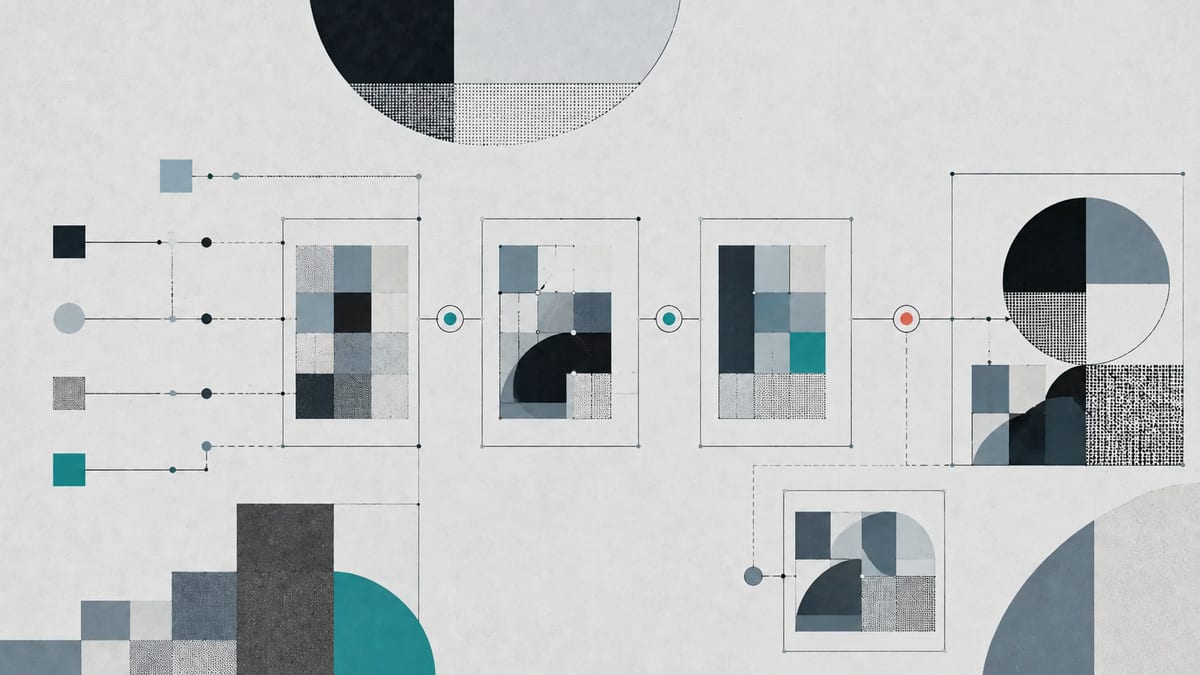
Plot does the opposite: it multiplies the readings of the same situation to see what moves and what does not. What withstands every framework, you can commit to. What changes box as soon as you change an axis is not a conclusion, it is an artefact.
LEADERSHIP QUESTION
Which choice holds up best under uncertainty?
WHAT PLOT LETS YOU TEST
It is the only part of the analysis on which to commit resources without reservation.
The facts, the criteria retained, or the weight given to them. The three disagreements are not settled the same way.
An option that is mediocre on two criteria may be the only acceptable one on the third.
Naming them before the meeting stops them derailing it.
A board, a partner, a funder get up to speed on the subject in fifteen minutes.
WORKING LOOP
Keeping the discarded readings is a guarantee of honesty. Without it, you can vary the axes until you get the picture that suits you, and nobody will know.
PUTTING IT IN PERSPECTIVE
The stable core is the deliverable. The rest tells you how far you can rely on it.
CONCRETE EXAMPLE
A company compares three possible developments. On the first reading — market potential against competitive intensity — option A dominates. On the second, which brings in the organisation’s real capability, it is option B. On the third, centred on payback time, A comes back on top.
Option C, meanwhile, comes last in all four readings. That is the only solid conclusion of the exercise, and it is enough to decide: C is dropped, resources concentrate on A and B, and the question left open — our ability to execute A — becomes the critical assumption of the decision note.
Illustrative case. A single reading would have given a sharper answer, and a less reliable one.
PLOT AND THE OTHER WORKSPACES
The confusion is easy, so let us be clear. Grid is the workspace of judgement: criteria are defined there, options are scored there, and that is the basis on which you decide — invest, defend, experiment, exit — a decision recorded in the file. Plot is the workspace of verification: it tests whether that judgement depends on the framework in which it was made.
Upstream, Atlas supplies the facts and their traceability. Downstream, Mix and Calc quantify the options that held up, Map examines the dependencies they create, Pilot projects them into the trajectory. And the open questions become, in the decision note, the critical assumption and its fallback condition.
HOW TO GET IT
Annual licence
Your teams build the readings and prepare the review.
Fixed fee
Plot is the workspace where the workshop takes place: the readings are built in front of the participants, and disagreements are located in the session instead of settling in.
Subscription
At each review, the same readings are redone on updated data. What has moved is visible at once.
All three modes exist for every workspace. The detail of each pricing model is on the Offer page.
See the three access modes in detailWHO PRODUCES WHAT
| Deliverable | Produced by |
|---|---|
| Readings, axes and frameworks | The tool |
| Simulations and variations | The tool |
| Identification of the stable core | The tool |
| Keeping of discarded readings | The tool |
| Choice of criteria and weightings | Workshop run by inNOVAtio |
| Proposed synthesis and open questions | AI assistance, to be validated and signed by a person |
| What you retain for the decision | Your decision, recorded in the file |
A sentence produced by the assistance never enters a decision note without someone to stand behind it.
FACTS, READINGS AND ASSISTANCE
That is true of every visual representation, including ours. A position is never a fact: it is the product of axes, criteria and weightings that someone chose. Plot always shows those choices next to the picture, and keeps the discarded readings — that is what prevents varying the frameworks until the desired conclusion appears.
On the assisted synthesis, three rules. It does not know your market: it works on the content of your file, within its declared perimeter. It formulates questions and flags gaps; it does not recommend, and it does not vote. And every proposal it produces carries that label all the way through, with the name of the person who validated it.
An assisted synthesis remains a useful draft. It is not an opinion.
Plot does not decide. It shows what remains true when assumptions and scenarios change.
A first thirty-minute conversation, with the analysis you have already done.